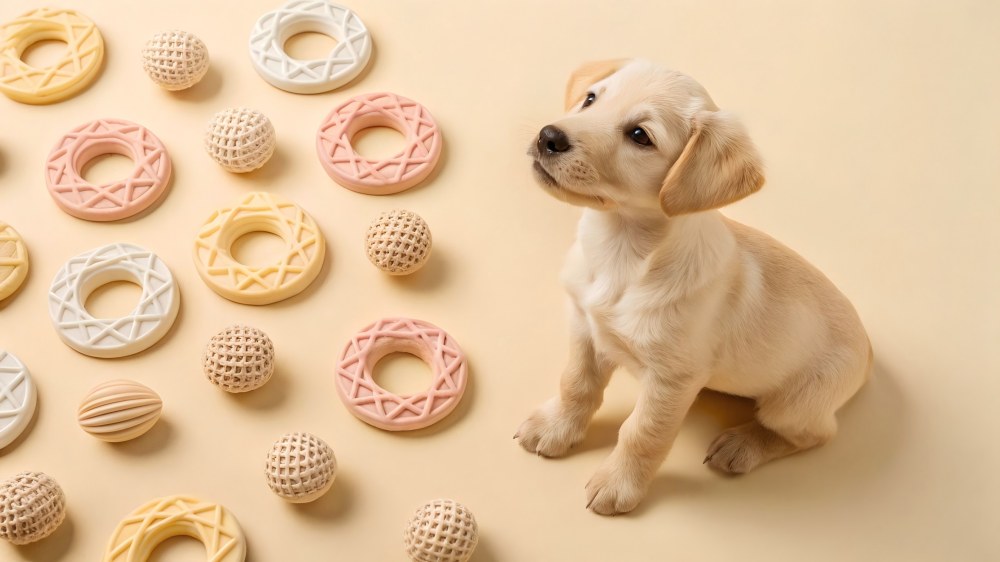
Puppies don’t need the same chew toy from 8 weeks to 12 months. Use this as a quick guide:
Age | Teething Stage | Best Toy Type |
8–12 weeks | Baby teeth, sore gums | Extra-soft rubber, plush with hidden rubber, small rings |
3–6 months | Intense teething, chewing peak | Soft–medium rubber, freezable toys, puppy-safe nylon |
6–12 months | Adult teeth coming in, power chews | Medium–firm rubber, tougher puppy nylon, larger shapes |
If you’re unsure how to size and assess hardness, this guide on choosing the right dog toy by size and material is worth a look.
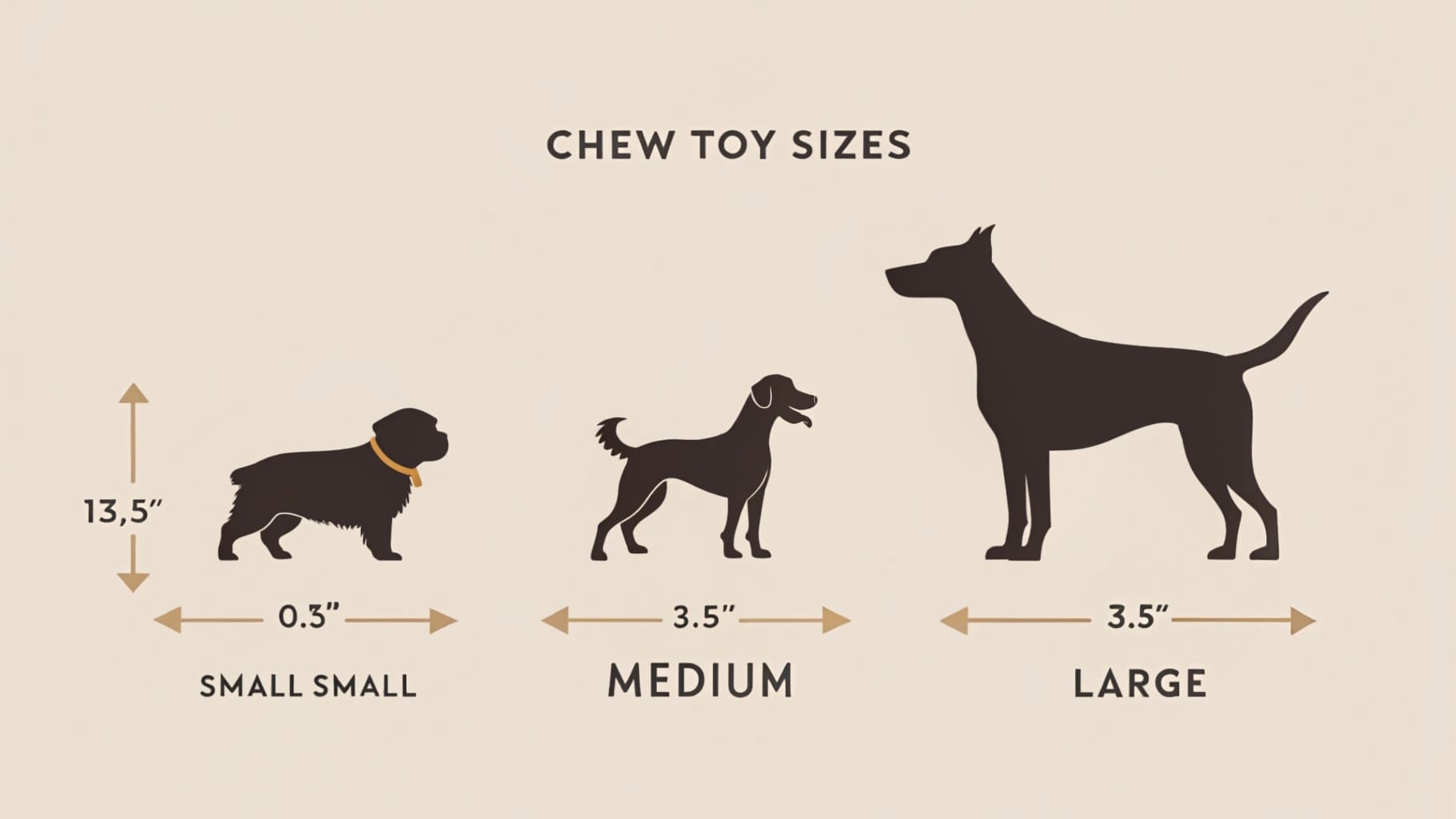
Pick size based on adult breed size, not how tiny your puppy looks today:
Breed Size | Example Breeds | Toy Size Tip |
Toy (under 5 kg) | Chihuahua, Pomeranian, Toy Poodle | XS toys, super light, narrow grip |
Small (5–10 kg) | French Bulldog, Dachshund, Pug | S toys, not wider than their mouth |
Medium (10–25 kg) | Cocker Spaniel, Border Collie, Doodle mixes | M toys, solid but not heavy |
Large (25 kg+) | Labrador, Golden, GSD | L / XL toys, thick, clearly non-swallowable |
If the toy can fit fully behind your puppy’s back molars, it’s a choking risk. Size up.
Aggressive chewers
lGo for: durable natural rubber, puppy-safe nylon bones, solid shapes (bones, dumbbells, thick rings).
lAvoid: thin plush, rope with loose threads, hollow, flimsy plastic.
Gentle chewers
lGo for: softer rubber, plush with reinforced seams, light balls, softer textured toys.
lAvoid: very hard “indestructible” toys that can hurt teeth.
Different puppies enjoy different chew “jobs”:
Play Style | Best Shapes |
Tug + chew | Rings, figure-8 toys, rope + rubber combos |
Solo chewer | Bones, wishbones, dumbbells, pacifier shapes |
Chaser / fetcher | Balls, sticks, bone-shaped fetch toys |
Problem-solver | Stuffable bones, treat-dispensing toys |
If your puppy loves fetch, a durable ball or stick-style toy will probably get more use than a fancy shape that just sits there.
For sensitive puppies or cautious owners, focus on:
· Latex-free and BPA-free plastics and rubbers
· Natural rubber dog toys instead of cheap PVC
· Flavor-free or mild flavors for sensitive stomachs
· Hypoallergenic materials (no wool, feathers, or strong fabrics)
Always read labels for material and size, just like you would when learning how to choose other dog gear correctly.
During the teething phase, I recommend:
· 3–5 active toys in rotation:
· 1–2 soft/soothing toys (including a freezable option)
· 1–2 durable daily chews (rubber or puppy nylon)
· 1 enrichment / treat toy
Rotate weekly so toys feel “new” and keep your puppy interested.
Swap the toy immediately if you notice:
· It’s too hard: your puppy avoids it, or it sounds like glass when tapped on your knee.
· It’s too small: they can almost swallow it or fit it sideways in their mouth.
· Frantic chewing + frustration: your puppy gets over-aroused, not calmer.
· Pieces breaking off, deep cuts, or sharp edges in the toy.
· Gum damage: excessive bleeding, cracked baby teeth, or your puppy cries when chewing.
The right chew toy should keep your puppy busy, calmer after chewing, and never put their teeth or airway at risk.
Puppy teething can be rough, but with the right setup and chew toys, you can protect your home and your sanity.
Don’t dump 20 toys on the floor. Most puppies do better with 3–5 chew toys in active use and the rest stored away.
Keep a mix of:
· 1–2 cooling / freezable toys (like the minardipets FreezeBone™ Cooling Teething Stick)
· 1 soft but durable rubber toy for light chewers
· 1 tougher chew for stronger jaws
· Rotate toys every 2–3 days so each one feels “new” and exciting.
· Use high-value chews during the puppy’s peak biting times (usually mornings and evenings).
Cold = instant teething relief for puppies.
· Soak a clean cloth in water or low-sodium broth, twist it, and freeze it.
· Use freezer-safe puppy teething toys (natural rubber or fabric-based cooling sticks).
· Offer these cold chews after meals or during cranky, mouthy moments.
Avoid ice cubes for tiny breeds or aggressive chewers—they can chip teeth or become a choke risk.
Mouthing is normal, but you can’t let it become a habit.
When your puppy bites hands:
· Say a calm “nope” or “uh-uh”
· Immediately offer a chew toy instead
· Praise when your puppy chews the toy
· Spray puppy-safe bitter deterrent on furniture/legs of chairs and keep a chew toy within reach in every “problem area.”
· If your puppy is targeting table legs or skirting boards, place a toy right there and reward when they choose it.
These commands are non negotiable with teething puppies.
Leave it:
· Hold a toy or treat in your closed hand.
· When your puppy stops pawing/licking, mark (say “yes”) and reward from your other hand.
Drop it:
· Trade up: offer a treat or another toy when they have something in their mouth.
· Say “drop it” as they release, then reward.
Use these cues every time you swap a shoe, sock, or forbidden object for a chew toy.
Give your puppy clear “yes” areas.
Use puppy pens, crates, or gated rooms stocked with:
· 2–3 safe chew toys
· 1 cooling or freezable teething toy
· Block access to cables, kids’ toys, shoes, and laundry.
· In high-risk spots (office, kids’ room), always keep one dedicated chew toy available.
Old toys can turn into choking hazards fast.
Replace a toy when you see:
· Deep cracks, missing chunks, or sharp edges
· Strings, stuffing, or squeakers exposed
· The toy is now small enough to fit fully inside your puppy’s mouth
If you’re using softer natural rubber toys (like the minardipets Natural Rubber Puppy Dumbbell), check them daily during heavy teething weeks.
A tired brain = less destructive chewing.
Mix chew time with:
· Short training bursts (sit, down, stay, leave it, drop it)
· Simple puzzle or enrichment toys
· Sniffing games (scatter kibble on a mat or grass)
Aim for:
· 10–15 minutes of focused play or training
· Followed by 10–20 minutes of quiet chewing
This rhythm helps your puppy calm down, self soothe, and sleep better—so teething feels like a phase you can actually handle.
When it comes to chew toys for teething puppies, a few common mistakes can turn a good idea into a safety risk fast.
Puppy teeth and jaws are still developing. Super hard or “indestructible” toys can:
· Crack baby teeth
· Make sore gums worse
· Put your puppy off chewing the right things
For teething relief, stick with puppy specific, softer chew toys labeled for your dog’s size and age.
Anything that can be chewed off, swallowed, or tangled is a no-go:
· Bells, squeakers that pop out, glued-on eyes
· Ribbons, ropes that easily fray, long strings
These are choking and blockage risks. Go for solid, one-piece designs with no loose parts.
Plush toys are fine for snuggles and light play, but most teething puppies:
· Rip seams open
· Pull out stuffing and swallow it
Use plush toys as supervised toys only, and always pair them with durable puppy chew toys that can handle real chewing.
Every new toy is a test. Until you know how your puppy handles it:
· Watch for aggressive chewing, chunk removal, or tearing
· Remove the toy if pieces start coming off
Just like you’d supervise with new leads or collars until the fit is perfect (similar to how you’d approach safe dog lead fitting), you should supervise new chew toys too.
Many “dog toys” aren’t sized or made for teething puppies:
· Avoid vague materials and unknown plastics
· Look for BPA free, phthalate free, non-toxic labels
· Match the toy size to your puppy’s weight and breed
If the toy can fit fully in your puppy’s mouth, it’s a choking risk.
Some puppies are aggressive chewers, others are gentle nibblers:
· Power chewers need stronger, but still puppy safe, materials
’· Gentle chewers may prefer softer rubber or fabric-based toys
If you ignore their style, they’ll go back to furniture, shoes, or cables as their “preferred” chew.
A bored puppy will invent their own “toys”: table legs, skirting boards, and even cables. To avoid this:
· Keep a small rotation of chew toys available
· Mix in textures: rubber bones, rings, balls, and cooling toys
· Combine chew time with short training and play sessions
Chew toys are only half the solution—structure, supervision, and variety do the rest.
Most puppies:
· Start teething: around 3–4 months (baby teeth begin to fall out)
· Peak teething: around 4–6 months (heavy chewing, sore gums, more drool)
· Finish teething: by 6–8 months (most adult teeth are in)
Large breeds may take a bit longer, up to 9–10 months, to fully finish.
For teething relief that actually works, I recommend:
· 3–5 chew toys in active rotation (different textures, shapes, and hardness levels)
· 1–2 cooling/freezable toys
· 1–2 more durable toys for stronger chewers
Rotate toys every few days so they stay “new” and exciting, and always remove damaged toys.
This depends on chewing style, material, and size, but as a rough guide:
· Softer teething rubber toys:
2–6 weeks with normal use
· Medium-durable nylon or rubber chew toys:
1–3 months for most puppies
· Heavy-duty aggressive chewer puppy toys:
Can last the entire teething phase, but should still be checked weekly
A good rule:
· If you see deep cracks, sharp edges, or chunks missing, it’s time to replace.
· The toy should wear down gradually, not break off in large pieces.
Durability is important, but safety comes first. I’d rather replace a toy a bit early than risk a vet emergency.
Need the recommended toys again?
If you’d like to review the best picks based on safety, durability, and teething relief, visit this guide again:
Best Chew Toys for Teething Puppies (2026 Expert Picks)

 Amy
Amy Amy Wang