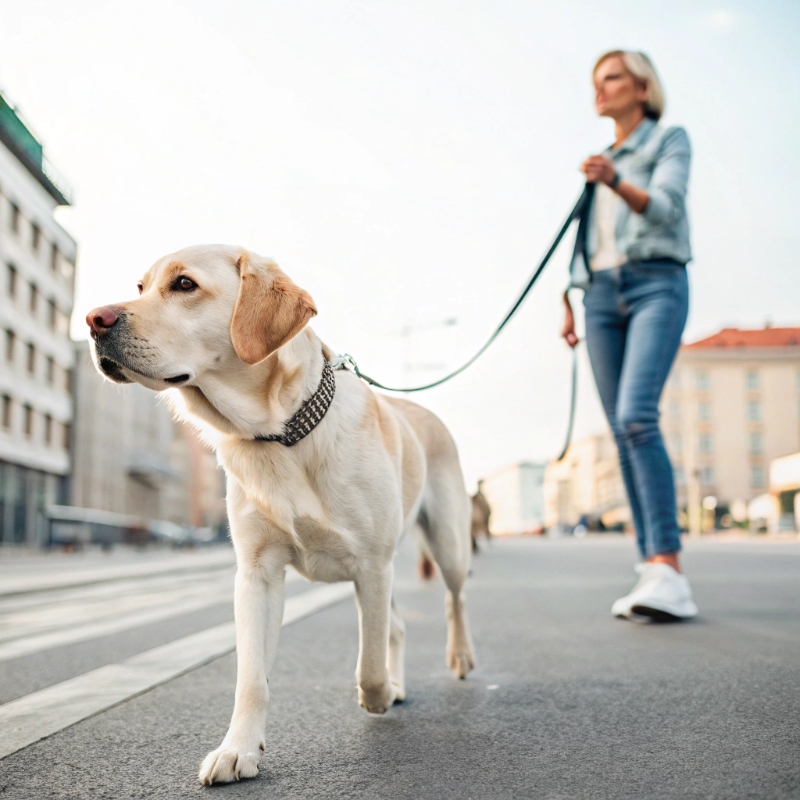
Choosing the right dog leash material matters more than most people think. It affects safety, comfort, and how long the leash actually lasts. Here’s how I look at each option.
Pros:
· Lightweight and affordable
· Huge range of colors and styles
· Dries fast, good for daily walks
Cons:
· Can cause leash burn if a dog suddenly pulls
· Some strong pullers can fray it over time
· Chewers can damage it fast
Best for:
· Everyday walks, puppy leash, backups
· Owners who want a nylon dog leash that’s budget-friendly but reliable
Pros:
· Very strong when well-made
· Softens and molds to your hand over time
· Looks premium and professional
Cons:
· Needs care (cleaning and conditioning)
· Not ideal for heavy rain or mud if you’re lazy with care
· Typically more expensive
Care tips:
· Wipe dirt off after walks
· Use leather conditioner every few weeks
· Keep away from soaking water when you can
Best for:
· People who want a leather dog leash that lasts years
· Trainers, working dogs, and daily city walkers
Pros:
· Very strong, ideal as a heavy duty leash
· Great grip, especially when wet
· Rounded shape is gentle on hands
Cons:
· Can be bulky for tiny dogs
· Some rope leashes get fuzzy with heavy use
Best for:
· Strong pullers and large breeds
· Hiking and outdoor use (rope dog leash, dog leash for hiking)
Pros:
· 100% waterproof and easy to wipe clean
· Doesn’t hold odor, mud, or bacteria
· Stays flexible in heat, rain, and snow
Cons:
· Slightly less “natural” feel than leather
· Can be a bit stiff in very low-quality versions
Best for:
· Rainy climates, beach walks, muddy trails
· People who want a waterproof leash that just rinses clean
When to Choose Padded, Reflective, or Chew-Resistant
Padded handle / comfortable dog leash handle
· For long walks, sensitive hands, or strong pullers
· Great on double handle leash or traffic handle leash styles
Reflective leash / reflective dog walking gear
· Essential for night walks, low-light commutes
· Pair with reflective collar or harness for full visibility
Chew-resistant / chew proof dog leash
· For dogs that chew through regular nylon
· Look for coated cable or reinforced rope with strong hardware
For a deeper breakdown on leash materials and matching them with collars and harnesses, I’ve covered this in detail in my guide on dog collar, harness, and leash set sizing and care at minardipets.
Material | Comfort | Strength | Maintenance | Best Use Case |
Nylon | Medium | Medium–High | Easy (wash & dry) | Daily walks, puppy leash, backups |
Leather | High (after break-in) | High | Moderate (condition) | Training, city walks, long-term use |
Rope | High grip | Very High | Easy–Moderate | Durable dog leash for pullers, hiking |
Biothane / Waterproof | Medium–High | High | Very Easy (wipe clean) | Rain, mud, beach, waterproof leash |
I design and select our leashes around these exact trade-offs: strength first, then comfort, then style. Once you know how each material behaves, picking the right dog leash for your lifestyle gets much easier.
Choosing the right dog leash isn’t “one size fits all”. Different dogs and lifestyles need different setups. Here’s how I match leashes to real-life situations.
Best Puppy Leash for Training and Early Walks
For puppies, I focus on lightweight control and training:
· Material: soft nylon dog leash or light biothane
· Length: 4–6 ft for daily use, plus a long line leash (10–20 ft) for recall
· Features: comfy handle, simple clip, not retractable
Why: pups need clear feedback and safe freedom without heavy hardware.
Best Dog Leash for Strong Pullers and Reactive Dogs
For pullers and reactive dogs, safety and control come first:
· Type: no-pull leash with double handle leash or traffic handle leash
· Material: heavy duty leash (thick nylon, rope, or leather)
· Add-ons: bungee leash or shock absorbing dog leash to protect your joints
· Pair with: secure dog leash and harness set or head collar (see this guide on using a gentle lead for dogs)
Skip: retractable dog leash for these dogs; it reduces control and can escalate reactivity.
Best Leash for Small Dogs vs Large and Giant Breeds
Dog Size | Recommended Leash |
Small dogs | Slim nylon dog leash, 4–6 ft, light clip |
Medium dogs | Standard flat 1.9–2.5 cm width, 5–6 ft |
Large / giant dogs | Wide leather dog leash or rope, heavy duty leash, 4–6 ft, strong hardware |
Key rule: the smaller the dog, the lighter the gear; the bigger the dog, the stronger and shorter the leash.
Best Leash for Night Walks and Low-Light Safety
Visibility is non negotiable:
· Type: reflective leash or waterproof leash with reflective strips
· Features: reflective stitching, bright color, matching reflective dog walking gear (collar/harness)
· Length: 4–6 ft for tight control in the dark
Optional: combine with a small LED clip on the leash or harness.
Best Dog Leash for Hiking, Camping, and Outdoor Adventures
For trails and travel, I want durability + flexibility:
· Type: rope dog leash or climbing-style leash, or biothane waterproof leash
· Length: 6–10 ft; plus a long line leash (10–30 ft) for safe roaming
· Features: secure carabiner-style clip, padded handle, sometimes hands-free leash belt
· Safety: avoid standard retractable dog leash in rough terrain; see this guide on retractable leash safety outside.
Recommended Leash Setups for Multi-Dog Households
For two or more dogs, I keep it simple and tangle free:
· Option 1: Individual 4–6 ft leashes with comfortable dog leash handle
· Option 2: Coupler attached to one strong heavy duty leash (only for well-trained, similar-sized dogs)
· Option 3: Hands-free leash with dual clips for calm, trained dogs
My rule: if one dog pulls or is reactive, give that dog its own dedicated leash for maximum control.
Loose leash walking means your dog walks by your side (or slightly ahead) with the dog leash relaxed, not tight. No dragging, no towing you down the street.
Aim for:
· Loose leash: The leash forms a “J” shape, not a straight line.
· Calm focus: Your dog checks in with you, not just the environment.
· Clear rules: Pulling never gets them where they want to go faster.
Reward your dog every time the leash is loose. If the leash goes tight, movement stops.
Use a standard nylon dog leash or leather dog leash (about 4–6 ft) for best control.
1. Start indoors or in your yard
· Clip the leash to a harness or collar.
· Take one step forward. If the leash stays loose, mark and reward (with “Yes!” and a treat).
2. Build a short pattern
· Walk 3–5 steps, reward at your side.
· If your dog forges ahead and pulls, stop. Wait until the leash loosens or they return, then move again.
3. Practice “Let’s go”
· Use one cue for walking: “Let’s go.”
· Walk in random directions. Reward your dog for staying with you.
4. Add small distractions
· Move to a quiet street, then gradually to busier areas.
· Keep sessions short: 5–10 minutes, several times a day.
Consistency matters more than long sessions.
Using a Training Leash, Long Line, or Double Handle
Different dog training leash types help with control:
· Standard 6 ft leash: Best for daily city walks and teaching loose leash.
· Long line leash (10–30 ft): Great for recall training in open areas. Your dog gets freedom, you keep safety.
· Double handle leash / traffic handle leash: One normal handle, one close to the clip for tight control at crossings, crowds, or around other dogs.
For recall work with a long line leash, let the dog move around, then call them back. Reward heavily when they return.
Handling Pulling, Lunging, and Reactivity
For pullers and reactive dogs, you need both technique and the right gear.
For pulling:
· The moment your dog pulls:
· Stop walking.
· Wait for them to turn back or the leash to loosen.
· Then move forward again.
· Pulling = no progress. Loose leash = forward movement.
For lunging at dogs/people/bikes:
· Increase distance before your dog explodes.
· Ask for simple cues: “Sit,” “Watch me,” or a hand target.
· Reward calm behavior as triggers pass.
· Use a no-pull leash and harness set or head collar for extra control. If you’re unsure how to fit gear correctly, check guides like this breakdown on how to fit a dog harness correctly.
For strong pullers / shock absorption:
· A bungee leash or shock absorbing dog leash can reduce strain on your shoulders and your dog’s neck.
Common Leash Training Mistakes to Avoid
Avoid these if you want fast results:
· Letting pulling “sometimes” work
If your dog drags you to the park once, they’ll keep trying. Be strict: pulling never pays.
· Using a retractable dog leash for training
Retractable leashes teach dogs that pulling makes the leash longer. Use them only after your dog has solid leash manners.
· Over-correcting
Constant leash jerks make dog

 Amy
Amy Amy Wang