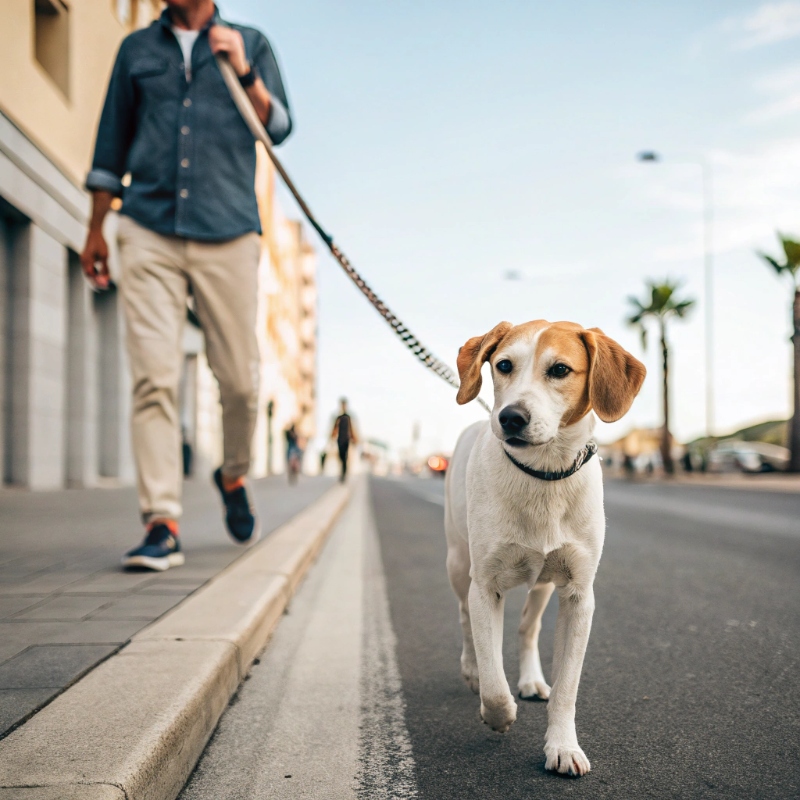
dog-leash-Guide series-part 1of 3
If you live with a dog, a quality dog leash isn’t optional—it’s essential. The right leash keeps your dog safe, keeps you in control, and keeps everyone around you comfortable and protected.
Most cities and towns have dog leash laws that require your dog to be on a leash in public spaces. A reliable nylon dog leash or leather dog leash helps you:
· Avoid fines and legal issues
· Prevent your dog from running into traffic or private property
· Protect other dogs, children, and people who may be nervous around dogs
Walking with a proper dog leash and harness set is one of the simplest ways to show you’re a responsible owner.
A sturdy, heavy duty leash can be the difference between a normal walk and a serious emergency. With a secure traffic handle leash or no-pull leash, you can quickly manage your dog when:
· A car, bike, or scooter suddenly appears
· Another dog rushes over off-leash
· Your dog spots a squirrel, cat, or bird and wants to bolt
Strong clips, durable materials, and a chew proof dog leash design reduce the risk of breakage, escapes, and dangerous “run-offs.”
A good dog training leash is one of your most important training tools. It helps you teach:
· Loose leash walking without constant pulling
· Basic manners like “sit,” “wait,” and “heel”
· Polite greetings instead of jumping or lunging
Using a training lead for recall or a long line leash gives your dog controlled freedom while you reinforce good behavior and build better obedience.
The right leash doesn’t just control your dog—it makes life easier for you too. A comfortable dog leash handle, double handle leash, or hands-free leash can:
· Reduce strain on your shoulders and wrists
· Give you better control in busy areas
· Make walks smoother, calmer, and more enjoyable for both of you
Whether you choose a bungee leash for shock absorption or a retractable dog leash for open spaces, comfort and control should always come first.
Daily walks with a safe, reliable dog leash are about more than just “getting energy out.” They help you:
· Give your dog regular exercise and mental stimulation
· Guide your dog calmly through different environments
· Build trust and a stronger bond through clear, consistent handling
A good leash—whether it’s a rope dog leash, waterproof leash, or reflective leash for night safety—turns every walk into a chance to connect, communicate, and keep your dog safe in the real world.
When I choose a dog leash, I focus on safety, control, and comfort—for both the dog and the person holding the handle. Here’s what actually matters.
Always match the dog leash to your dog’s body and behavior:
· Small dogs / toy breeds: light nylon dog leash, slim hardware, shorter length (1.2–1.5 m) for better control.
· Medium dogs: standard flat leash with solid clip, medium width.
· Large & giant breeds: heavy duty leash with strong hardware, wider strap, reinforced stitching.
· Strong pullers or working breeds (Husky, Malinois, GSD) need a durable dog leash for pullers, not a thin, decorative one.
Leash length changes how your walk feels:
· Short leash (0.9–1.2 m) – tight control in busy city streets, vet visits, elevators.
· Standard (1.5–1.8 m) – best everyday length for most dogs and loose leash walking.
· Long line leash (5–10+ m) – for recall training and safe freedom in open spaces.
· Adjustable or hands-free leash – ideal when you switch between crowded areas and parks, or when you’re jogging.
Width isn’t just about looks; it’s about safety:
· Calm, small dogs: narrow puppy leash or slim rope dog leash.
· Average family dogs: medium-width nylon dog leash works well.
· Strong pullers / reactive dogs: wide, thick no-pull leash or bungee leash with heavy-duty clips and reinforced stitching.
· If your dog chews, look for chew proof dog leash options.
Your routine should drive your choice:
· City walks: shorter traffic handle leash or double handle leash for tight control around people and cars.
· Hiking / camping: strong dog leash for hiking, often rope or waterproof with secure hardware and possibly a long line leash for safe exploration.
· Running / jogging: running leash for dogs or hands-free leash with shock absorption and adjustable waist belt.
· Rainy or muddy areas: waterproof leash (Biothane-style) that’s easy to wipe clean.
If the handle hurts, you won’t enjoy the walk:
· Look for a comfortable dog leash handle with padding or ergonomic grip.
· Neoprene or soft padded handles protect your hand from sudden pulling.
· For long walks, a smooth, rounded handle (like on many rope dog leashes) reduces rubbing and hotspots.
Smart safety details make a big difference:
· Reflective leash stitching or piping for night or early-morning walks (pair it with other reflective dog walking gear for full visibility).
· Traffic handle near the clip for instant close control at crossings, crowds, and around other dogs.
· Strong, rust-resistant secure clips (locking carabiners or heavy-duty snap hooks) to prevent accidental unclipping.
· Regularly inspect stitching and hardware; if you’re using a nylon dog leash, proper care and cleaning keep it safer for longer—this guide on how to clean and maintain nylon dog gear applies to leashes too.
Choosing the right dog training leash, no-pull leash, or everyday standard leash isn’t about looks first—it’s about matching size, strength, lifestyle, and safety so every walk is controlled, comfortable, and secure.
A standard flat dog leash (usually 4–6 ft, nylon or leather) is still the most reliable choice for most owners.
Use it when you need:
· Daily walks in the city or suburbs
· Basic dog training leash work (sit, stay, heel)
· Better control in busy areas
Pick a flat nylon dog leash if you want something light, affordable, and easy to clean, and pair it with a good everyday collar (you can see how we think about materials in our guide to the best nylon dog collars).
A hands-free leash clips to a belt around your waist or crossbody strap, so your hands stay open.
Best for:
· Running or jogging with your dog
· Pushing a stroller or walking with kids
· Hiking when you need your hands free for balance
Choose a model with a bungee leash section and a traffic handle leash segment so you can quickly reel your dog in when crossing streets.
A bungee dog leash has an elastic section that stretches under tension.
Use it when:
· Your dog pulls or surges forward suddenly
· You want a shock absorbing dog leash to protect your shoulders and your dog’s neck
· You run or hike and want smoother movement
It’s ideal for strong, energetic dogs, but you should still combine it with no-pull leash training, not just rely on the elastic.
A retractable dog leash lets your dog move 10–26 ft away while you control length with a lock button.
Use only when:
· You’re in open, low-traffic areas (parks, fields)
· Your dog already has good recall and loose leash walking manners
· You want extra sniffing freedom without fully unclipping
Avoid retractables on busy sidewalks, near roads, or with reactive dogs. A heavy duty leash with fixed length is safer in tight spaces.
A training lead for recall or long line leash (10–30 ft) gives distance while keeping a physical connection.
Great for:
· Recall training (“come”)
· Off-leash practice in a safe, open area
· Tracking, nose work, and field training
Look for a waterproof leash or coated webbing so mud, sand, and grass don’t ruin the line.
A slip lead is a leash and collar in one loop, tightening when the dog pulls. A martingale-style leash combines a limited-slip collar with a leash.
Use carefully for:
· Short-term control at the vet, groomer, or shelter
· Dogs that slip out of regular flat collars
· Advanced handlers managing specific behavior issues
These are tools, not shortcuts. They should go with proper training and, for some dogs, a dog leash and harness set or gentle lead approach (we break this down more in our note on using a gentle lead for dogs).
There are niche leash styles that solve specific problems:
· Rope dog leash: Strong, climbing-style rope, great grip, ideal as a durable dog leash for pullers
· Waterproof leash / Biothane: Perfect for rain, mud, beach days; easy to wipe clean
· Reflective leash: High-visibility stitching or piping, essential reflective dog walking gear for night or early-morning walks
· Traffic handle leash / double handle leash: Extra grip near the clip so you can pull your dog in close at crossings or in crowds
For most owners, a setup with one standard flat dog leash plus one specialty leash (hands-free, long line, or reflective) covers almost every situation.
More information ,please read part 2:https://www.minardipets.com/news/dog-leash-guide-materials.html

 Amy
Amy Amy Wang