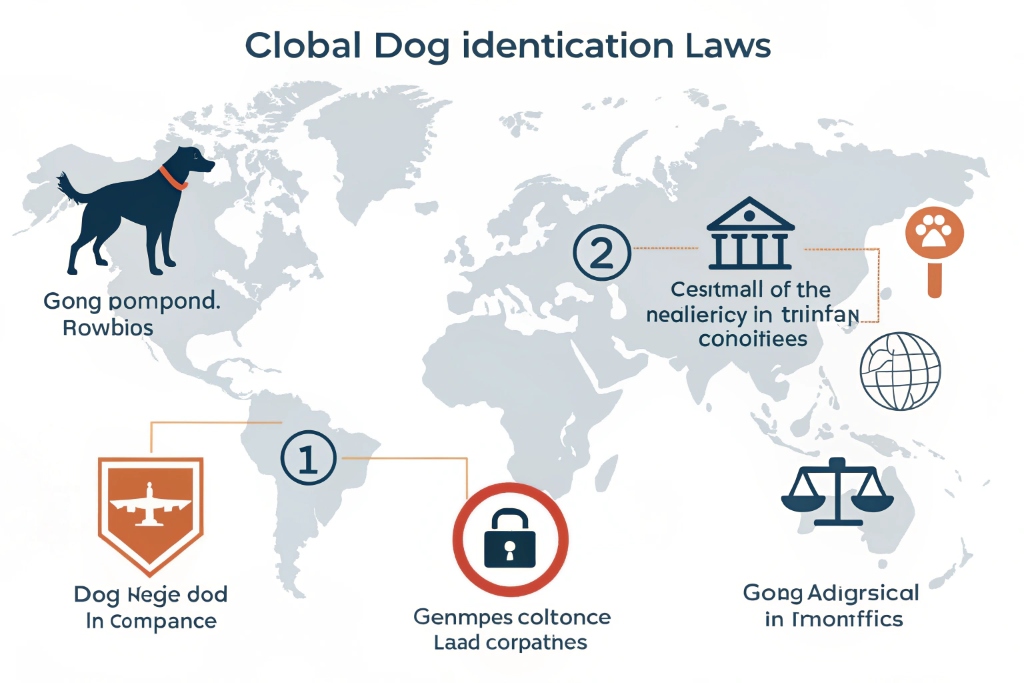
Choosing the right dog ID tag in 2026 isn’t just about style — it’s about safety, legality, and making sure your dog can return home quickly if they ever get lost. In this first part of our complete 2026 guide, we cover global legal requirements, what information must be engraved, how to format phone numbers, and what details to avoid for privacy and safety.
If your dog ever slips the leash, that little ID tag is the fastest way home—and in many places, it’s not just smart, it’s the law.
Laws change by city and region, but here’s the basic picture:
United States
lMost states and cities require dogs to wear:
lRabies tag (proof of vaccination)
lLicense tag (proof you registered your dog with the city/county)
lMany areas legally require a name + owner contact on a collar or tag when off your property.
United Kingdom
Under the Control of Dogs Order 1992, a dog in a public place must wear a tag showing:
lOwner’s name
lAddress
lPostcode
lPhone number isn’t legally required but strongly recommended.
European Union
lRules vary by country, but common requirements include:
lMicrochipping (e.g., mandatory in many EU states)
lRegistration with local authority
lA visible dog ID tag with contact info is strongly encouraged and may be required by local bylaws.
Canada
lMost municipalities require:
lDog license tag on the collar
lUp-to-date rabies vaccination
lSome cities also require ID info on a tag when in public.
Australia
lState laws typically require:
lRegistration tag from your council
lMicrochipping in many states
lCouncils can fine you if your dog is in public without its registration/ID tag.
In many regions, you legally need to:
· Keep your dog’s rabies tag attached to their collar or harness.
· Display the license tag issued by your city or council.
· Renew both on schedule (usually yearly or every few years).
Think of ID tag + rabies tag + license tag as your dog’s legal ID set.
Skipping tags can get expensive and risky:
Common consequences:
lFines for unlicensed or unidentified dogs
lExtra impound fees if your dog is picked up with no ID
Possible legal trouble if your dog bites and you can’t prove rabies status quickly
In some cities, each day an unlicensed dog is at the shelter adds daily fees on top of the original fine.
Laws are hyper-local, so always check where you actually live (and where you travel):
l Search: “[Your city/county/state] dog license requirements”
① Check your city or council website under:
② Animal control
③ Pet registration
④ Dog ownership rules
· Call your vet or local shelter – they usually know the exact rabies and license rules.
· If you travel with your dog, look up destination city/country dog ID laws before you go.
Bottom line: A clearly engraved dog ID tag with your contact info plus the legally required rabies and license tags keeps you on the right side of the law—and massively increases the odds your dog gets back to you fast.
A good dog tag does two things: it keeps you legal, and it gets your dog home fast if they’re lost. Here’s how I set up every personalized dog ID tag we sell.
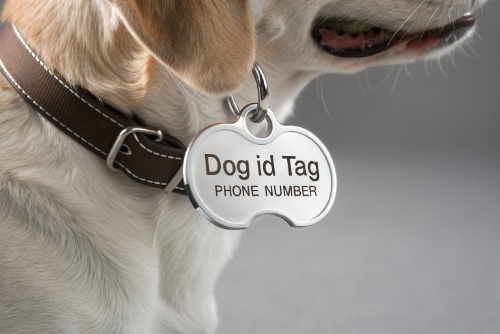
At minimum, your dog name tag with phone number should include:
· Dog’s name (or your last name if you prefer privacy)
· Primary phone number (mobile)
· City + country (helps if your dog is found while traveling)
For small tags or tiny puppies, I still keep name + phone as non negotiable.
Laws differ, but in many places the legal dog tag requirements are:
· Owner’s name
· Owner’s address (sometimes just town/postcode)
· License or registration number in some regions
That’s the legal side. For real world lost dog prevention, best practice is:
· Front: Dog’s name + 1–2 mobile numbers
· Back: Short return message + city/country + key medical note (if needed)
This way your tag is both compliant and actually useful in an emergency.
Here’s a simple layout that works on most custom engraved dog tags (front and back):
Front:
· Line 1: DOG NAME
· Line 2: Main phone: +1 555 123 4567
· Line 3: Backup phone: +1 555 987 6543
Back:
· Line 1: “I’m microchipped” or “Microchipped – vet/scan me”
· Line 2: “Needs meds” / “Allergic: chicken” (only if medically important)
· Line 3: City + country (e.g., “Austin, USA”)
For very small engraved puppy tags, shorten to:
· Name
· Phone
· “Microchipped” or “Indoor dog – please call”
Some info creates more risk than value. I avoid:
· Full home address (city/area is enough in most cases)
· Owner’s full name + address + phone all together (identity theft risk)
· “Reward $$$” (can attract the wrong attention)
· Pet’s registration or microchip number (that belongs in the database, not on the tag)
If you’re using smart pet ID tags like a QR code dog tag, keep the printed info simple and let the QR code link to more details.
Space is limited, so every character matters:
Phone numbers:
· Use international format: +44 7…, +1 555…, +61 4… – helps if your dog is found while traveling
· Skip brackets and unnecessary symbols: +1 555 123 4567 is easier to read than (+1) 555-123-4567
· If space is tight, write: M: +1 555 123 4567 / Alt: +1 555 987 6543
Short message ideas (keep it under ~20 characters per line):
· “CALL MY HUMAN”
· “LOST? PLEASE CALL”
· “INDOOR DOG – CALL”
· “NEEDS DAILY MEDS”
· “I’M DEAF / I’M BLIND” (if critical for handling)
Before you finalize a custom pet ID tag, double check that your collar fit is right, because a properly fitted collar keeps the tag facing up and readable. If you’re unsure, use a simple measuring guide like this detailed dog collar sizing and fit guide for 2026 to get both comfort and safety right.
With a clear understanding of legal rules and engraving essentials, you’re now ready to choose a dog tag that truly fits your dog’s lifestyle. In Part 2, we explore materials, shapes, sizes, and the top dog tag trends of 2026.

 Amy
Amy Amy Wang