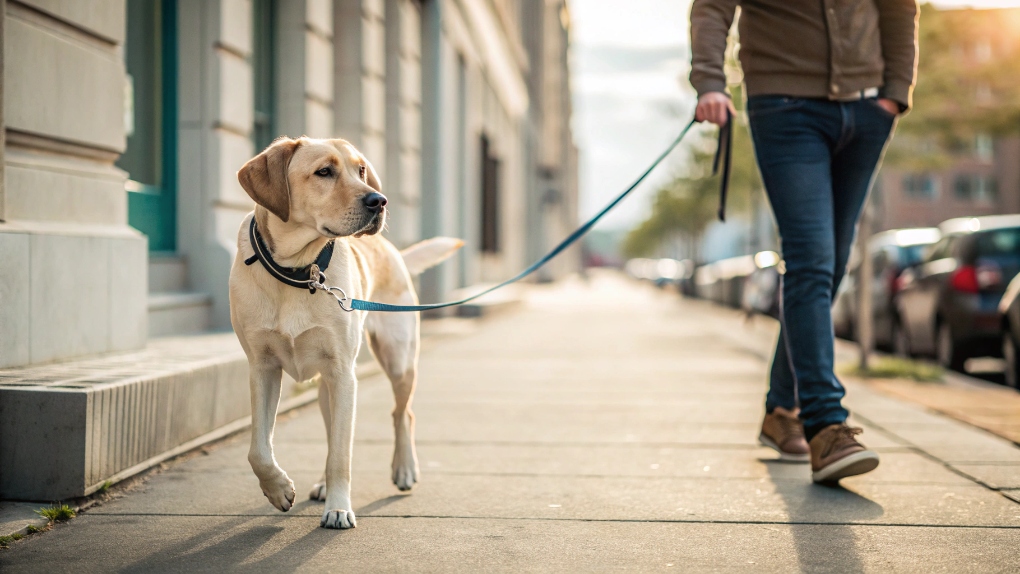
Gentle leads (dog head collars) work by controlling the dog’s head. When pulling happens, the head naturally turns back toward the handler instead of allowing the dog to drive forward with full body strength. Because dogs have far less leverage through the head than through the chest or shoulders, this often results in a noticeable reduction in pulling, sometimes from the very first walk.
A front-clip harness works through the chest. When the dog pulls, the leash attachment at the front causes the body to turn sideways, reducing forward momentum. Many dogs accept harnesses more easily at first because nothing touches the face, which can make this option feel more comfortable for puppies or dogs that are sensitive around the muzzle.
In real-world use, neither tool is universally better. Some strong pullers calm down immediately with a head collar, while others walk more confidently in a harness. The difference usually comes down to the individual dog’s sensitivity, energy level, and how the handler uses the tool.
A gentle lead uses redirection rather than pain. Pressure is light, brief, and released as soon as the dog slows or turns back. When fitted and handled correctly, this is why many trainers and veterinarians describe head collars as a humane no-pull solution.
Prong collars apply pinching pressure around the neck. While they can stop pulling quickly, they also increase the risk of pain, stress, and fear-based behavior if misused. Correct timing and handling are critical, and even then, some dogs become anxious or shut down when wearing them.
Choke chains tighten continuously under tension. If a dog pulls hard or suddenly lunges, pressure can build quickly on the neck and throat. For inexperienced handlers, choke chains are especially easy to use incorrectly, increasing the risk of physical strain or injury.
In terms of effectiveness, gentle leads tend to offer very high control for strong pullers and dogs that lunge suddenly. Front-clip harnesses work well for moderate pullers but may be less effective for extremely powerful dogs. Prong and choke collars can produce fast short-term results, but those results often come with higher long-term risks.
Comfort varies by dog. A properly fitted gentle lead can be comfortable, but many dogs need time to adjust to wearing a nose loop. Harnesses are usually the easiest option for dogs to accept immediately. Tools that tighten around the neck generally rank lowest for comfort, especially during longer walks.
Safety depends heavily on handling. Gentle leads are safe when used with a loose leash and smooth guidance, not sharp jerks. Harnesses are considered very safe for most dogs. Tools that rely on neck pressure increase the risk of tracheal strain, neck injury, and behavioral fallout when used incorrectly.
Gentle leads often create an instant change in pulling behavior, but they require proper introduction and desensitization so the dog is comfortable with something on the face. Handlers also need to learn to keep the leash loose and avoid popping or jerking motions.
Front-clip harnesses are simple to use and easy for most owners to understand. Progress can be slower for extreme pullers, but many family dogs learn loose-leash habits smoothly over time.
Prong and choke collars may suppress pulling through discomfort, but they do not reliably teach true loose-leash walking. Once the tool is removed, pulling often returns unless additional training has been done.
Most no-pull tools fall into a similar price range, but long-term value differs.
Gentle leads and quality harnesses often reduce the need to cycle through multiple failed tools. While prong or choke collars may appear cheaper upfront, they can lead to higher costs later, whether through injuries, stress-related behavior issues, or the need for professional training support.
There is no single no-pull tool that works for every dog.
A gentle lead is often a good choice for strong pullers, reactive dogs, or handlers who need extra control without using force. A front-clip harness works well for mild pullers, young dogs, and dogs that are uncomfortable with anything on the face. Harsh tools are best avoided if the goal is calm, confident walking without pain.
Now that you understand how gentle leads compare with harnesses and other no-pull tools, the next question most owners ask is about safety.
In Part 3, we’ll look closely at whether gentle leads are safe or cruel, and which dogs should — or should not — use them.

 Amy
Amy Amy Wang