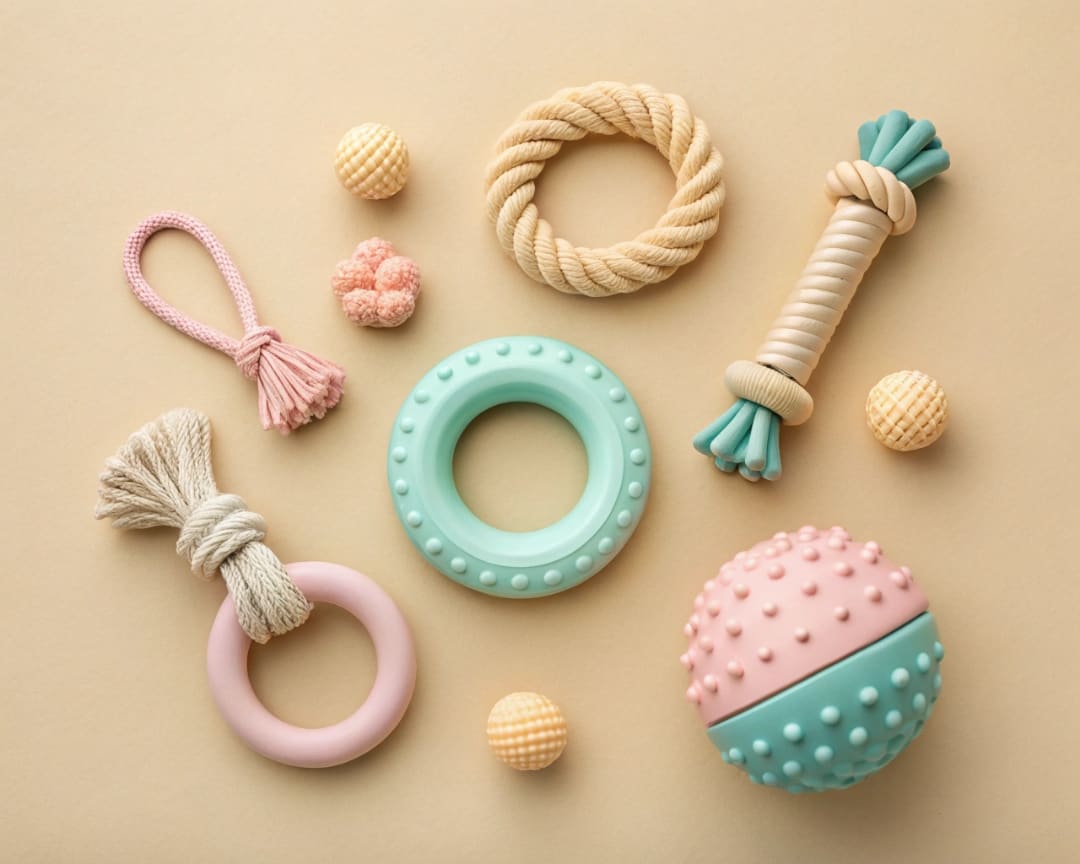
Picking the right chew toys for teething puppies comes down to size, bite strength, and tooth stage. The toy should always be big enough, soft enough, and safe enough for your pup
Small pups (Yorkies, Poms, Dachshunds, etc.) need lightweight, softer toys they can actually grip.
What works best:
lSoft rubber puppy toys (mini KONG style, flexible rings)
lSmall rope toys with tight weave
lGentle plush toys with minimal stuffing
lFreezable puppy teething toys for extra gum relief
Quick size rule: the toy should be bigger than your puppy’s mouth, but light enough they can carry easily. Avoid hard nylon and heavy bones at this stage.
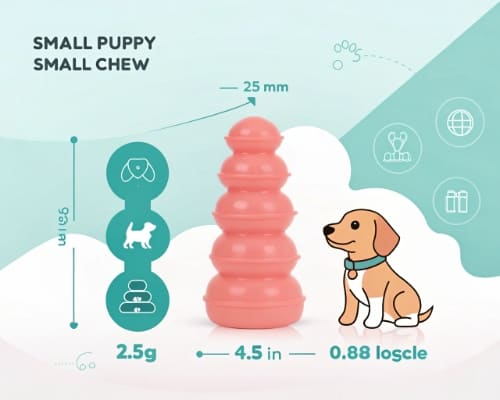
If you want a size safe, soft option, check this kind of small puppy chew toy design as a reference for shape and toughness: durable rubber toys for small dogs.
Bigger breeds (Labs, Goldens, Shepherds) need larger, thicker toys but still puppy soft, not rock hard.
Good picks:
lThick rubber teething toys for dogs (puppy KONG, rubber bones)
lLarge rope toys (knots bigger than their muzzle)
lPuppy-safe nylon chews labeled “puppy” or “moderate chewer”
lStuffable toys for food and mental work
·
Key point: even for large breeds, skip adult hard bones and antlers while they still have baby teeth or newly erupting adult teeth.
For guidance on choosing toy shapes and sizes for bigger pups, I follow the same principles used when we design multi-size dog toys in our catalog, as in this style of safe, durable dog toy selection guide.
Some puppies chew like they’re on a mission. You don’t need “indestructible” (too hard), you need tough but with flex.
Look for:
l Rubber teething toys for dogs rated “strong” but puppy-specific
l Puppy Nylabone–style chews (softer than adult versions)
l Textured rubber rings and bones with a bit of give
l Tightly woven rope toys (and replace as soon as frayed)
Avoid: real bones, antlers, hard plastic, and toys that don’t dent if you press your fingernail into them.
Your puppy’s mouth changes fast, so toy hardness should change with it.
Puppy Stage | What’s Happening | Best Toy Hardness |
8–12 weeks | Baby teeth, tender gum | Very soft rubber, plush, rope |
3–5 months | Heavy teething, tooth loss | Soft–medium rubber, puppy nylon |
5–7 months | Adult teeth erupting, strong jaw | Medium rubber, firmer puppy |
7+ months (teen stage) | Most adult teeth in, stronger chewing | Medium–firm, “young dog” chews |
Simple rule:
lIf your fingernail can’t make a slight dent in the toy → it’s too hard for a teething puppy.
lIf your puppy can tear chunks off quickly → it’s too soft or unsafe.
lMatch size + softness + chew style, and you’ll keep your puppy’s teeth safer while also protecting your furniture.
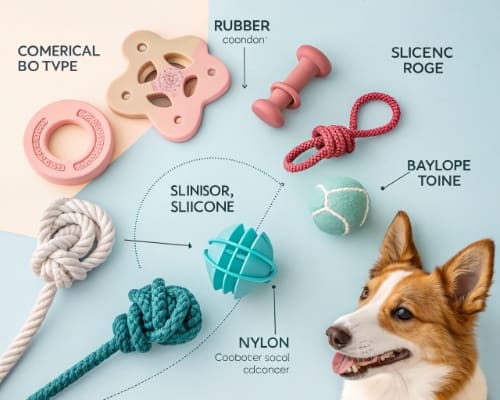
When I’m choosing chew toys for teething puppies, I stick to a few proven, puppy safe materials. The goal is simple: soft on gums, tough enough to last, and absolutely non toxic.
For most pups, soft rubber puppy toys are the safest all round choice.
lSlightly squishy, so they soothe sore gums instead of cracking baby teeth
lDurable enough for daily chewing, but not rock hard
lGreat for stuffing with treats or puppy food to keep them busy
lEasy to wash and reuse
Look for rubber teething toys for dogs that are clearly labeled as puppy strength, not adult power chewers. Classic options are KONG puppy toys, and many brands (including our own lines alongside things like nylon dog collars that match your setup) now design sets for a full puppy starter kit.
Silicone and flexible plastic toys can be great for gentler chewers:
lSofter bite feel than rubber, ideal for small breed puppies
lOften designed with teething rings for dogs and easy grip shapes
lLightweight, so tiny pups can carry them around
Always choose non toxic puppy chew toys that are BPA free and phthalate free, and avoid hard, brittle plastics that can splinter.
Nylon puppy chews are good when you need durable puppy chew toys for stronger jaws:
lDesigned to shave off in tiny flakes, not break into chunks
lLast longer than most soft toys
lHelp with puppy dental health by scraping light plaque
Go for puppy specific lines like Nylabone puppy chews or Benebone for puppies. Skip ultra hard “for extreme chewers” nylon until adult teeth are fully in, especially for small breeds.
For real puppy gum relief, I always recommend having frozen puppy teething toys on rotation:
lYou can fill with water, broth, or wet food and freeze
lCold helps numb sore gums and reduce inflammation
lPerfect for the peak teething window (around 4–6 months)
Look for cooling teething toys for puppies in soft rubber or silicone. Avoid filling with salty stock or sugary liquids – use plain water or dog safe broth.
Textured chew toys do double duty: they soothe and clean.
lRidges and nubs help massage gums and wipe soft plaque
lGreat as daily puppy dental health toys
lMany rubber, silicone, and nylon chews now combine textures and grooves for treats
Stick with safe chew toys for puppies that have rounded, flexible textures – nothing sharp, spiky, or abrasive. Rope toys can help too, but only if you supervise and ditch them as soon as strings start to unravel.
When it comes to chew toys for teething puppies, I look at five core types that actually work in real life: rubber/silicone, freezable toys, edible/natural chews, interactive toys, and soft rope/plush options. Each one covers a different need: gum relief, boredom, training, and safe chewing.
Rubber teething toys for dogs are the backbone of any teething setup.
What I like about soft rubber puppy toys and silicone toys:
lThey’re gentle on sore gums but tough enough for daily chewing.
lMany are vet recommended puppy chew toys for safety and durability.
lYou can find non toxic puppy chew toys with the right softness for small, medium, and large breeds.
lMost are easy to clean and don’t splinter like hard bones or sticks.
Look for:
lPuppy specific rubber (often softer than adult versions)
lSolid designs (no tiny parts that can break off)
lSimple shapes that are easy for small mouths to grab
If you’re already shopping puppy gear, pairing a safe chew with a properly sized collar, like those in this nylon dog collar size chart guide, makes setup for a new pup much smoother.
Frozen puppy teething toys are one of the fastest ways to soothe puppy gums.
Why cooling teething toys for puppies work:
lCold helps numb sore gums during the worst teething days.
lMany freezable puppy toys are made from soft rubber or silicone that stays flexible when frozen.
lYou can add water, low sodium broth, or a bit of wet food to create extra gum relief.
Tips:
lDon’t freeze toys rock solid if your puppy is very young—keep them slightly soft.
lRotate between room temp and frozen toys so your puppy doesn’t get bored.
Edible puppy chews and natural chews for puppies are great when you want chewing plus a small reward.
Good options (always puppy labeled):
lGentle puppy chew bones (formulated softer than adult versions)
lLimited ingredient natural chews designed for puppies
lBranded options like Nylabone puppy chews or Benebone for puppies (use only their puppy lines, not adult hard chews)
What to focus on:
lSize: big enough that it can’t be swallowed whole
lTexture: firm but not rock hard for baby teeth
lIngredients: simple, easy to digest, no mystery chemicals
Treat these as short supervised sessions, not all day free for all chews.
Interactive puppy chew toys and stuffable puppy toys are perfect when you want puppy chewing prevention and mental enrichment at the same time.
Why I always include them:
lYou can stuff them with puppy safe food or soft treats.
lLicking and chewing help calm overexcited or anxious pups.
lGreat for crate time, solo time, and basic puppy training with chew toys.
Popular styles:
lHollow rubber toys like KONG puppy toys
lPuzzle style feeders made for puppies (softer and simpler than adult versions)
Use:
lSoft food, soaked kibble, or a little yogurt (check with your vet)
lFreeze the stuffed toys for extra challenge and gum relief
Rope toys for puppies and soft toys for teething puppies are for gentle chewing and comfort, not heavy duty power chewing.
Where they shine:
lLight tug games (with rules) to redirect biting away from your hands
lSoft comfort objects for crate or nap time
lSome rope textures can help with light puppy dental health by rubbing the teeth
What I watch for:
lThick, tightly woven rope with strong knots
lPlush toys with reinforced seams and minimal stuffing
lNo hard plastic eyes or loose parts that can be chewed off
Use rope and plush toys under supervision, and throw them out as soon as strings or stuffing start to pull loose. Combine them with more durable puppy enrichment toys so your dog has options for both comfort and serious chewing.
In this part, you’ve seen how age, size, chewing strength and material all work together to decide which teething toy is truly safe and effective for your puppy.
When you can match toys based on:
lSmall vs. medium/large breed puppies
lModerate chewers vs. aggressive chewers
lRubber, silicone, nylon, freezable toys, rope, and plush options
You can create a safer and more scientific teething setup for each puppy — instead of randomly buying toys and hoping they work.
Next: Part 3 – How to Use Chew Toys for Training, Cleaning & Long-Term Teething Care
In Part 3, we’ll cover how to introduce chew toys, rotate them, clean them properly, avoid common mistakes, and what to do when teething toys aren’t enough.

 Amy
Amy Amy Wang